
USDA Loans in Birmingham, AL
A USDA loan is a mortgage backed by the U.S. Department of Agriculture for buyers purchasing a primary residence in an eligible rural or suburban area. Household income must fall within the program limits for the county, and the property address must be in a USDA-eligible area.
Loan availability and terms depend on borrower and property qualifications.
Start with the life you want to build.
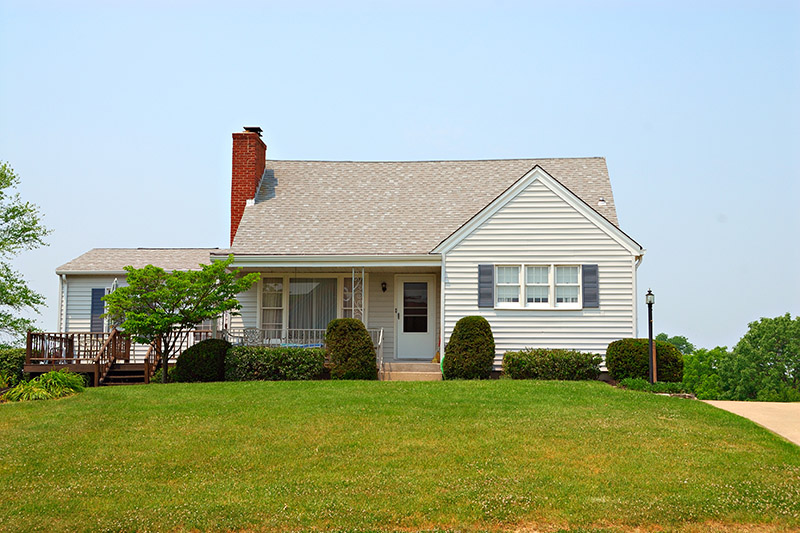
Start with the place you want to call home.
Explore the property, household, and cost considerations that matter for USDA financing.
A USDA loan is a home loan for a primary residence in an eligible area, made by a private lender under rules the U.S. Department of Agriculture sets for property location and household income. For buyers around Birmingham, AL, MortgageBanc (NMLS #2289) checks whether a USDA home loan fits your plans and helps you from pre-approval through closing. We are a private lender, not a government agency.
Key Takeaways
- Location comes first The property’s address must fall in a USDA-eligible area.
- Income has a ceiling Household income must be at or under USDA’s limit for the county.
- Primary residence only The home must be where you live, not a rental or second home.
- USDA sets the fees The program carries an upfront and an annual guarantee fee set by USDA.
- Lender rules apply too Credit and ratio requirements vary by lender in addition to USDA’s rules.
- Purchase focused Most borrowers use it to buy a home, often a first home.
Common Questions About USDA Loans
The questions we hear most about USDA loans are about edge cases: timing, misconceptions and how the program compares. Here are the common ones.
Do I have to be a first-time buyer to use a USDA loan?
No, first-time buyer status is not a USDA requirement. Our First Time Home Buyer page covers other programs for new buyers.
Is a USDA loan only for farms?
No, it is for owner-occupied homes, not working farms. The program does not finance income-producing farmland, so a typical single-family home on a residential lot is the usual fit.
Can I use a USDA loan for new construction?
It can work for a newly built home that is complete and meets the program’s property standards. Building from the ground up usually needs a different loan first, so ask us early.
What happens if an area’s eligibility changes while I am shopping?
USDA updates eligible areas from time to time, so an address that qualifies today may not later. We recheck the address when you go under contract.
How does a USDA loan compare with an FHA loan?
The biggest difference is that USDA limits where and at what income you can buy, while FHA does not. If your address or income falls outside USDA rules, our FHA Home Loan page may be the next stop.
How USDA Loans Work
A USDA loan starts with two address-based checks, property and income, and then follows a standard mortgage path. The appraisal adds a property condition review.
-
Check the property address
You or we enter the address on USDA’s eligibility site. If it is outside an eligible area, the program is off the table for that home.
-
Check household income
USDA sets income limits by county and by the number of people in the household, and the USDA property and income eligibility site lets you test both. Income for every adult in the household counts toward the limit.
-
Get a pre-approval
We review your credit, income, assets and debts against USDA’s rules and the lender’s own requirements.
-
Make an offer and order the appraisal
The appraiser confirms value and that the home meets the program’s property standards.
-
USDA review
After the lender approves the file, it typically goes to USDA for its own review before closing, which can add some time.
-
Close
You compare your Closing Disclosure with your Loan Estimate at least three business days before signing.
Is a USDA Home Loan a Good Fit?
A USDA home loan may be appropriate for buyers with moderate income who want a primary home in an eligible area and have limited savings for a down payment. Its location and income rules rule it out for many others.
Often a good fit
Buyers with steady, documented income under the county limit, who are open to homes in outlying parts of the metro, often look at USDA first. In our experience, Birmingham-area buyers who check homes on the eligibility map before touring save themselves from falling for a house that cannot use the program.
Consider another path
If your income is above the limit, the home you want is in an ineligible area, or you are buying a rental, USDA will not fit. Eligible veterans and service members may compare our VA Home Loan, and others may review Low Down Payment Purchase Options.
Costs, Fees, and What to Expect With a USDA Loan
USDA loans carry the usual closing costs plus two program fees that USDA sets: an upfront guarantee fee and an annual fee. The upfront fee can often be financed into the loan, and the annual fee is paid monthly. USDA sets the down payment rules, and lender requirements for credit and ratios vary.
| Feature | USDA loan | FHA loan |
|---|---|---|
| Property location | Must be in a USDA-eligible area | No location rule beyond county limits |
| Income limit | Yes, set by USDA by county | No income cap |
| Program fees | Upfront and annual guarantee fees set by USDA | Upfront and annual mortgage insurance set by HUD |
| Occupancy | Primary residence | Primary residence |
| Extra review | USDA reviews the file after the lender | Lender underwrites under HUD rules |
Illustrative calculation (hypothetical figures)
Lenders look at two ratios. If the qualifying monthly housing obligation (PITIA) uses about 28 percent of gross monthly income, the housing ratio is 28 percent. If that obligation plus all other monthly debts uses about 39 percent, the total debt-to-income ratio is 39 percent.
This example is illustrative, not an approval or a program minimum. The lender determines the accepted figures, included expenses, and required ratio for the selected program. Actual rates, APR, payments, and terms depend on your scenario and are provided in your Loan Estimate.
Common Mistakes With a USDA Loan
Most USDA setbacks come from the income and property rules, not from credit. These are the ones we see most.
-
Leaving out household income
What we typically see: a buyer counts only their own pay, but an adult relative living in the home also earns income, and that income counts toward the USDA limit. Tell us about everyone in the household at the start.
-
Falling for a home before checking the address
Two homes on the same road can fall on opposite sides of an eligibility line. Check the address before you make an offer.
-
Ignoring property condition
Peeling paint, a failing roof or a well that has not been tested can hold up the appraisal. Plan inspections and repairs early.
-
Forgetting the USDA review time
Set your closing date with the extra review in mind so your contract does not expire.
Local Considerations for Birmingham, AL
We help buyers in Jefferson, Shelby, St. Clair and Blount counties, from the Birmingham area out to Trussville and Pelham. Whether a given address qualifies is decided only by USDA’s eligibility map, so we check each property rather than assume. Because USDA requires a primary residence, the Alabama Department of Revenue homestead exemption page is worth reading: a homestead is a single-family owner-occupied home and up to 160 acres, you must live there on the first day of the tax year, and you apply at your county office.
Real property is assessed at the county level, with an October 1 lien date and taxes due the following October 1, per the Alabama Department of Revenue property tax page, which shapes your escrow and closing prorations. Look up flood status in the FEMA Flood Map Service Center; lenders require flood insurance in a special flood hazard area.

Ben Chenault
Ben Chenault is a mortgage professional with more than 30 years of experience helping homebuyers and homeowners throughout Birmingham and across Alabama. He specializes in home loans, mortgage refinancing, and financing solutions for first-time buyers, repeat buyers, and homeowners looking to achieve their financial goals. Known for his personalized service and clear communication, Ben is committed to making the mortgage process smooth, informed, and stress-free from application to closing.
Not affiliated with or endorsed by HUD/FHA, the VA, USDA, or any government agency. Copyright©2026 Fairway Independent Mortgage Corporation doing business as Fairway
Home Mortgage. NMLS#2289. 4750 S. Biltmore Lane, Madison, WI 53718,
1-866-912-4800. All rights reserved. This is not an offer to enter into an agreement. Not all
customers will qualify. Information, rates and programs are subject to change without
notice. All products are subject to credit and property approval. Other restrictions and
limitations may apply. This content is not intended as an advertisement or solicitation to
consumers residing in the state of New York. Equal Housing Opportunity.
MortgageBanc NMLS #2289 · Ben Chenault NMLS #130305. Licensed in AL, FL, GA, SC. Verify licensing at NMLS Consumer Access.
01 The home price
Try a purchase range that reflects the area you are considering.
02 Upfront expenses
Discuss the funds needed to complete your purchase.
03 Ongoing costs
Account for property taxes, insurance, and other housing expenses.
Program requirements vary. A conversation is not a commitment to lend or a loan approval.